Why Can't I Switch Off After Work? Understanding Work-Related Mental Overload

EchoSoul
4 min read
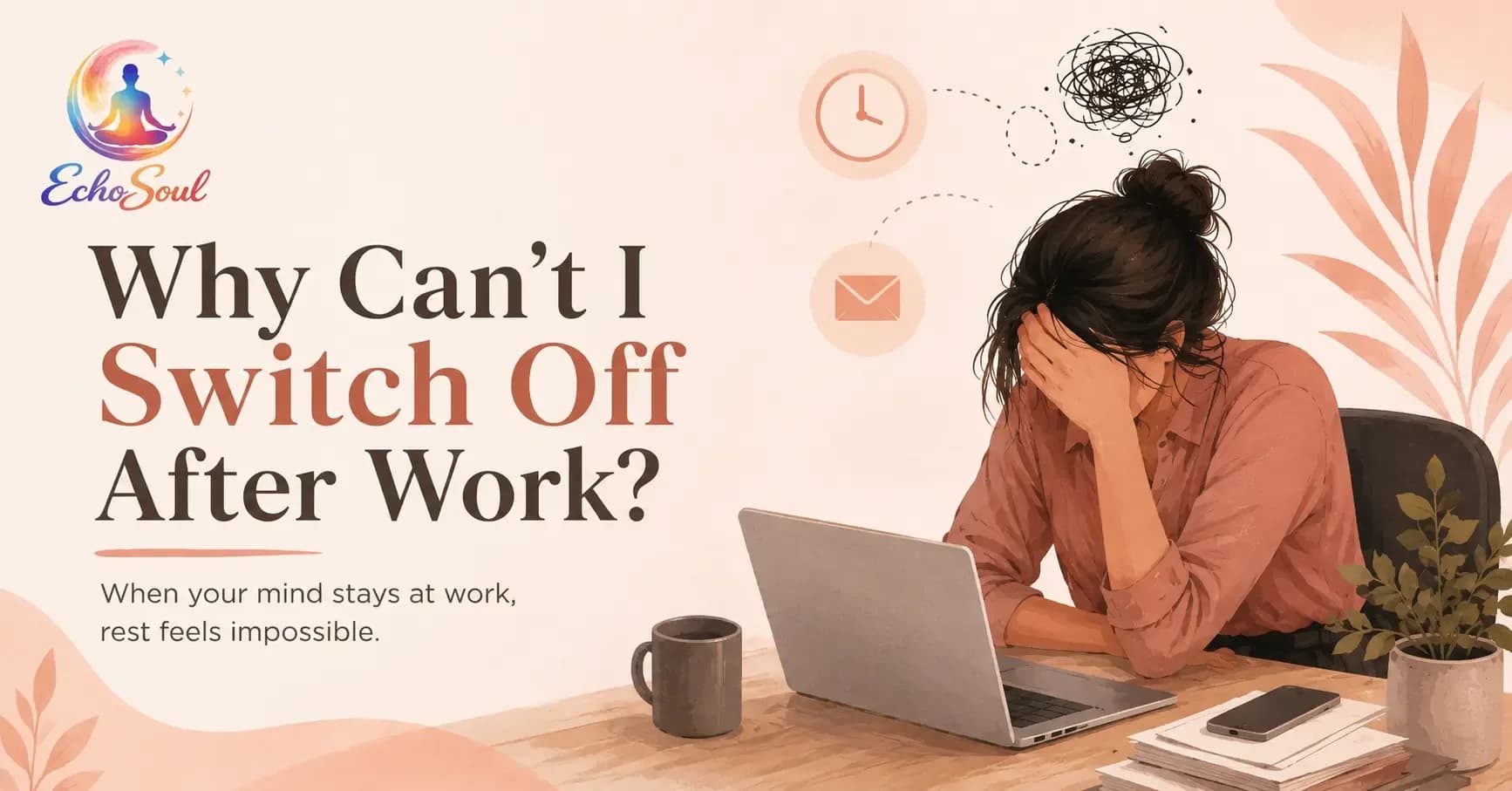
Why does work stay in your head after working hours?
Work doesn’t always end at the time it is meant to.
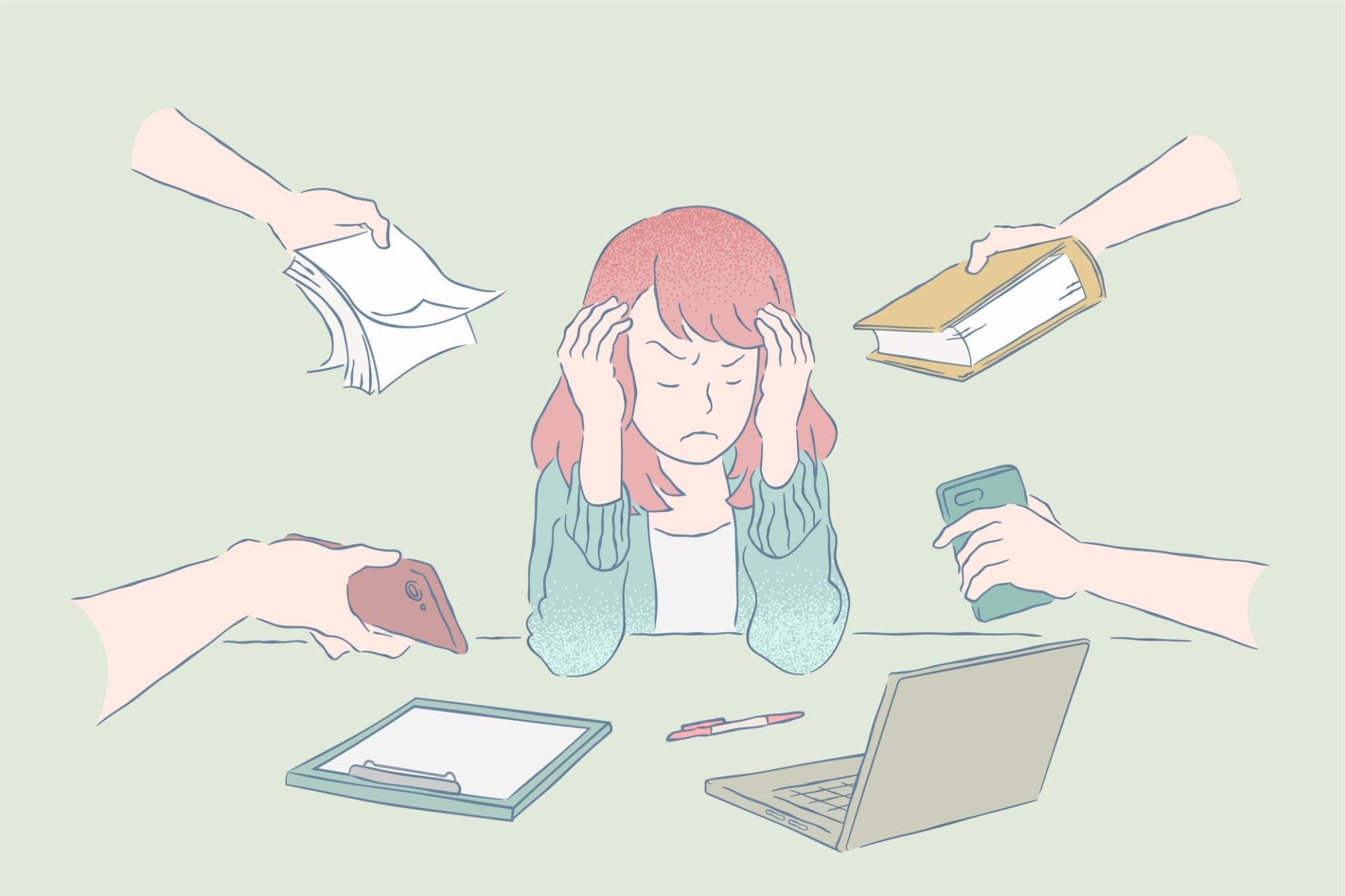
In modern work settings, constant mental availability is expected. Notifications come past the designated working hours. There are messages that go unanswered. There are deadlines that overlap. What is supposed to be completed within twenty minutes becomes a preoccupation all through the rest of the day.
The brain hates inconclusion.
If you have ten inconclusive matters in mind, then your brain will keep coming back to them since they do not have an ending in psychology.
That is why you could be physically tired but mentally awake.
Your body might still be in the state of solving something.
There is a weird phenomenon that occurs after an extended period of working.
You close your laptop. You leave your office. You might even change your clothing, have your dinner, and settle into your couch.
Yet your mind is far from resting.
You recall the email that you forgot to reply to.
You revisit what your boss said.
You try to decide if your presentation was enough.
You organize tomorrow's tasks in your mind.
And sometime between your meal and sleep time, you notice that while your body is out of the workplace, your mind never left it.
This is not just being preoccupied. For some individuals, it is an indication of work-related stress and overload.
Mental overload isn't always obvious
Mental overload is frequently thought of as an entire breakdown or being incapable of functioning.
It can be far more subtle.
Some signs might be:
Checking work emails too many times.
Feeling uneasy because you are not being productive.
Worrying about tomorrow while you should be enjoying today.
Having trouble focusing in conversation at home.
Feeling bad for relaxing.
Getting overly impatient about trivial matters.
Taking longer to fall asleep.
Ruminating on work even before waking up.
None of these necessarily mean that you are burnt out.
However, all of these might mean your mind is working harder than it was given the chance to process.
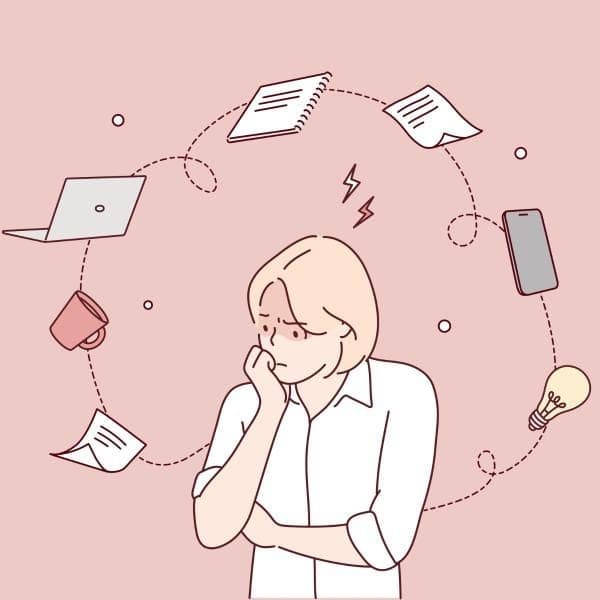
When productivity becomes psychological pressure
Another reason why people find it hard to relax is because productivity and self-worth are linked.
Unconsciously, you think:
"If I do not get anything done, then I am falling behind."
This makes resting into wasted time.
Rather than taking an evening as a period of rejuvenation, it becomes only a break between another task.
This can result in emotional exhaustion.
It is not about the fact that you value your work.
The issue comes in when work is mentally present in all aspects of your life.
Your body may be resting while your mind isn't
Television watching does not automatically imply psychological recovery.
Nor does the act of scrolling through social media with thoughts of the coming meeting.
Rest is not just the cessation of work.
Your mind needs chances to feel safe, connected, pleased, and free of responsibilities.
This may come in the form of eating dinner without your phone, going on a walk, speaking to a trusted individual, preparing food, reading, exercising, or just sitting without doing anything.
What really matters is not:
"Am I doing something after work?"
But rather,
"Is this helping me psychologically leave work?"
What can help you create a mental boundary?
There is no need for a fancy nighttime ritual.
First of all, have a transition.
At the end of the workday, list what needs to be done and what will be the first step tomorrow.
This will give something for your mind to "store" the problem in.
Then make some sort of ritual, which marks the end of working hours.
It might be changing clothes, walking a bit, taking a shower, making tea, or just packing up your working gadgets.
What matters most is the message:
Working day is over.
Also, it might be necessary to review your expectations from yourself.
When each undone task becomes a source of self-deprecating thoughts, no productivity tool will help.
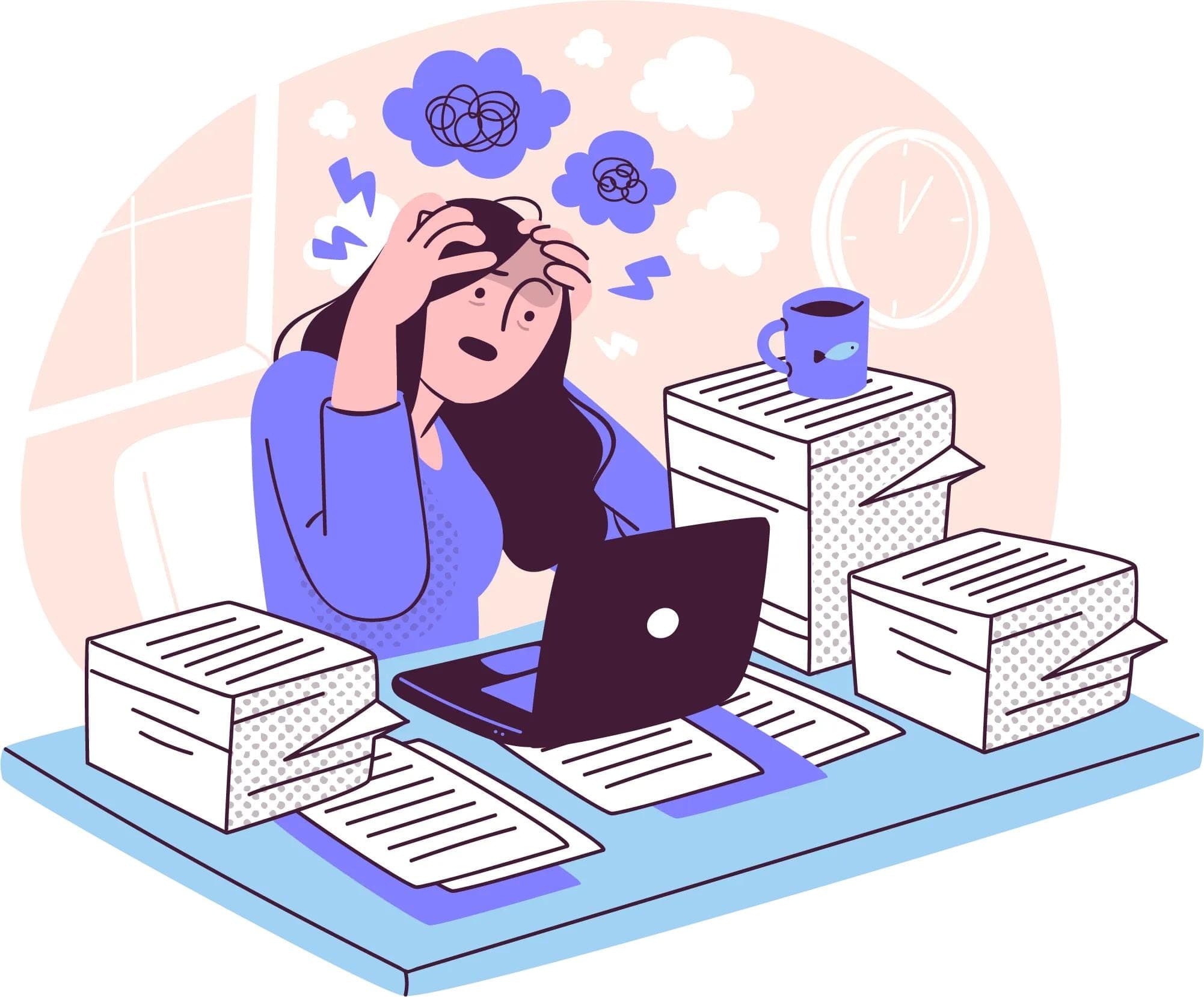
When switching off becomes consistently difficult
Work-related mental exhaustion needs to be considered, especially when it starts to affect sleep, relationships, mood, concentration, or physical energy.
Some times, it's not only the workload.
There could be factors like perfectionism, fear of letting people down, inability to say no, performance anxiety, or something more serious, the idea that you should always be useful.
Knowing the pattern might prove more useful than just trying to "relax harder."
EchoSoul Perspective
At EchoSoul, we see past the outward signs of occupational stress.
Our counselling and consultation services, employee counselling and wellness programs, and assistance with emotional health allow us to show people the reasons why their brains stay on even when the working day is over.
Some of them might need to create healthier boundaries. Others will need to deal with anxiety, perfectionism, emotional exhaustion, or any other issues that prevent them from relaxing.
You do not have to get burnt out before making that choice.
In some cases, figuring out how to turn your mind off is a step towards taking care of yourself.